Abstract
Introduction: The success of kidney transplantation depends on key factors including appropriate patient selection, satisfactory donor compatibility test, early commencement of immunosuppressant and premedication, good surgical technique with experienced transplant team, intensive post-surgery care, serial daily monitoring of renal function, early renal Doppler study as well as continuous immunosuppression and prompt follow up. We report our initial experience at BeWell Kidney Transplant Mission with emphasis on common contemporary indices that influence outcome of kidney transplantation including etiology, patient selection as well as serial outcome amongst donors and recipients following a successful kidney transplant camp. Methodology: This is a prospective observational study involving patients who had kidney transplantation secondary to varying degree of chronic kidney disease over an 8-month period. Structured questionnaire was designed to obtain relevant information. Data analysis was via python 3.x and results represented in tables and charts. Results: A total of 30 kidney transplantation were carried out within the study period. 80% of the recipients were males. All the donors were males. The youngest recipient was 22 years and the oldest was 80 years with a mean age of 61.53 +/- 3.04. Hypertension coexisting diabetes mellitus was the leading cause of kidney failure. Left donor nephrectomy dominated in 83.3% of cases while right donor nephrectomy was performed in only 17.7%. Donor stay ranges from 5 to 6 days while recipients were discharged between 8 to 10 days. The 6 months and one year prognosis was excellent. 96.7% of recipient had improved QoL with return to normal life. Conclusion: Our impressive outcome was probably due to strictly adherence to our local protocol which includes good patient selection, complete HLA typing, cross matching and DSA quantitative analysis, legal documentation, early commencement of immunosuppression, experience transplant team, good surgical techniques, high dependency unit monitoring until discharge. Improving understanding of how to best address these indices can empower transplant centers with appreciable progress toward a worthwhile experience.
1. Introduction
Organ transplantation is a critical medical innovation of the 20th century and kidney transplantation is a worthwhile therapy with the first successful kidney transplantation in human performed in 1954 in Boston, USA.
| [1] | Primc D, Rački S, Arnol M, Marinović M, Fućak-Primc A, Muzur A, Hawlina S, Markić D. The Beginings of Kidney Transplantation in South-east Europe. Acta Clin Croat. 2020 Mar; 59(1): 135-140.
https://doi.org/10.20471/acc.2020.59.01.16 |
[1]
Kidney transplantation remains the best form of renal replacement therapy for patients with varying degree of chronic kidney disease
| [2] | Kenenna, O., Christoper, O., Kumar, A. R., Felix, M., Abayomi, A., et al. (2025). Kidney Transplantation: Our Experience in a Private Tertiary Center in Abuja. Science Journal of Clinical Medicine, 14(2), 12-19. https://doi.org/10.11648/j.sjcm.20251402.11 |
[2]
. The quality of life (QoL) of these recipients exponentially improves with return to normal daily activities compared to hemodialysis.
| [2] | Kenenna, O., Christoper, O., Kumar, A. R., Felix, M., Abayomi, A., et al. (2025). Kidney Transplantation: Our Experience in a Private Tertiary Center in Abuja. Science Journal of Clinical Medicine, 14(2), 12-19. https://doi.org/10.11648/j.sjcm.20251402.11 |
| [3] | Obiatuegwu K, Aniede E, Olawoye T, Magnus F, Agrawal Kumar, Ugwuanyi C. Periallograft Hematoma Leading to Acute Rejection Post Renal Transplantation: A Case Presentation. AFRIJ. 2026; 12(1): 86-93.
https://dx.doi.org/10.4314/afrij.v12i13 |
[2, 3]
. The success of kidney transplantation depends on certain key factors such as appropriate legal donor selection, satisfactory donor compatibility test, early commencement of immunosuppressant with premedication, good surgical technique, experienced transplant team, intensive post-surgery care, daily serial monitoring of renal function, early renal Doppler studies as well as continuous immunosuppression and regular follow up.
| [4] | Legendre C, Canaud G, Martinez F. Factors Influencing Long-term Outcome after Kidney Transplantation. Transpl Int. 2014 Jan; 27(1): 19-27. https://doi.org/10.1111/tri.12217 |
[4]
.
Kidney failure is a global ailment affecting the quality of life (QoL) of patients. The QoL of these patients measurably appreciates after kidney transplantation although limitations still exists as per the availability of voluntary legal donors globally including Nigeria.
| [5] | Roberts LE, Kaur A, Jewitt-Harris J, Ready A, Milford DV. Kidney transplantation in low- and middle-income countries: thes Transplant Links experience. Pediatr Nephrol. 2024 May; 39(5): 1347-1353. https://doi.org/10.1007/s00467-023-06129-z |
[5]
Numerous factors such as the age of donor and recipient, frequency of dialysis, associated comorbid conditions, presence of malignancy, sepsis, degree of renal impairment and HLA typing/cross matching including quantitative donor specific antibody (DSA) assay impacts on graft survival after kidney transplantation.
| [6] | Shoo J, Msilanga D, Mngumi J, Valentine G, Kidunda P, Nyello M, Buma D, Furia F. Clinical profile and outcome of kidney transplantation at Muhimbili National Hospital, Tanzania. BMC Nephrol. 2024 Sep 28; 25(1): 323.
https://doi.org/10.1186/s12882-024-03765-x |
[6]
The general yardstick for a favorable outcome is normalization of renal function objectively confirmed by normal serum electrolyte, urea and creatinine with discontinuation of dialysis.
Kidney transplantation comes with numerous benefits compared with maintenance dialysis. Wang et al reported that although short-term prognosis appear similar globally, post-transplant survival have exponentially improved with one year allograft and patient survival rates of over 90% in United States.
The standardization of transplant allocation polices, strict legal guidelines and health care coverage invariably contribute to the long-term survival variation reported in developing countries.
| [1] | Primc D, Rački S, Arnol M, Marinović M, Fućak-Primc A, Muzur A, Hawlina S, Markić D. The Beginings of Kidney Transplantation in South-east Europe. Acta Clin Croat. 2020 Mar; 59(1): 135-140.
https://doi.org/10.20471/acc.2020.59.01.16 |
[1]
.
Age affects the outcome of kidney transplantation. Older patients with comorbid conditions are predisposed to greater risk of postoperative events compared to younger patients. The risks of delayed graft function, acute rejection and loss of graft in recipients older than 70 years are significantly higher compared to younger recipients.
| [8] | Nyengaard JR, Bendtsen TF. Glomerular number and size in relation to age, kidney weight, and body surface in normal man. Anatomical Record. 1992; 232(2): 194–201.
https://doi.org/10.1002/ar.1092320205 |
| [14] | Foroncewicz B, Mucha K, Florczak M, Szymańska A, Ciszek M, Durlik M, Górski A, Kieszek R, Kosieradzki M, Nazarewski S, Gałązka Z, Pączek L. Long-term Outcome of Renal Transplantation: A 10-year Follow-up of 765 Recipients. Pol Arch Intern Med. 2019 Aug 29; 129(7-8): 476-483.
https://doi.org/10.20452/pamw.14914. |
[8, 14]
These older patients also have attenuated metabolic response to surgery impacting adversely on the general condition and may have secondary effect the outcome of kidney transplantation.
| [8] | Nyengaard JR, Bendtsen TF. Glomerular number and size in relation to age, kidney weight, and body surface in normal man. Anatomical Record. 1992; 232(2): 194–201.
https://doi.org/10.1002/ar.1092320205 |
[8]
.
Pre-emptive kidney transplantation is recommended for younger patients with declining kidney function to avert the need for dialysis. It also offers the best outcome with preservation of the functions of the native kidney.
| [9] | Martín P, Errasti P. Trasplante renal [Kidney transplant]. An Sist Sanit Navar. 2006; 29 Suppl 2: 79-91. Spanish. |
[9]
Pre-emptive kidney transplantation is seen as a better treatment option for patients with renal impairment or declining glomerular function. The recipient also enjoys the most favorable outcome with excellent graft survival.
| [9] | Martín P, Errasti P. Trasplante renal [Kidney transplant]. An Sist Sanit Navar. 2006; 29 Suppl 2: 79-91. Spanish. |
[9]
However, the increasing number of patients requiring KTP has led to a significant increase in waiting list with disproportionate demand for donor organs. This has led to renewed debate on re-evaluation of timing and the establishment of standard guideline to bridge the gap. While increasing number of retrospective studies challenged the universal benefit of pre-emptive kidney transplantation, the preservation of the native renal function and averting the need of dialysis with associated economic burden remains a significant selling point for pre-emptive transplantation especially with a related voluntary living donor.
| [10] | Cseprekal O, Jacquelinet C, Massy Z. Push toward pre-emptive kidney transplantation - for sure? Clin Kidney J. 2024 Dec 9; 17(12): sfae335. https://doi.org/10.1093/ckj/sfae335 |
[10]
.
Patients who had a failed kidney transplant are a unique group of chronic kidney disease (CKD) population that are increasing in number.
These group of patients are usually predisposed to several complications either from CKD or continuous administration of immunosuppressant in order not to preclude repeat kidney transplant due to high donor specific antigen (DSA). Aside poor QoL and depression due to return to hemodialysis, these patients may remain on expensive immunosuppressive medication which may drain their resources especially in Nigeria where these patients are not covered with insurance. Recently, there is no consensus on the optimal use of immunosuppressant post kidney transplant failure with several studies suggesting surgical removal of the failed allograft in order to discontinue immunosuppressant.
These reduces the risk of mortality, side effects from medications as well conserve the slim economic resources of these patients. Although the indications for elective graftectomy remain vague, retaining the failed allograft may induce subsequent failure due to high cytotoxic antibody levels with increased risk of repeat transplant failure.
| [3] | Obiatuegwu K, Aniede E, Olawoye T, Magnus F, Agrawal Kumar, Ugwuanyi C. Periallograft Hematoma Leading to Acute Rejection Post Renal Transplantation: A Case Presentation. AFRIJ. 2026; 12(1): 86-93.
https://dx.doi.org/10.4314/afrij.v12i13 |
| [11] | Gill JS. Managing patients with a failed kidney transplant: how can we do better? Curr Opin Nephrol Hypertens. 2011 Nov; 20(6): 616-21.
https://doi.org/10.1097/MNH.0b013e32834bd792 |
[3, 11]
Factors affecting success of repeat kidney transplantation includes judicious use of immunosuppressant drugs, to -do or not-to-do graftectomy, timing of repeat transplantation, risk of sensitization, expert management of CKD post-transplant failure as well as appropriate preparation for dialysis and psychological workup. The psychological impact of failed kidney transplantation is significant to induce fear which further emphasis on the role of a psychologist/mental health physician in the preparation of these patients as well as their family.
Elderly recipients may have significant cognitive impairment, comorbid conditions and immunosuppressant associated side effects with progressive decline in graft function leading to chronic graft failure.
| [13] | Kenenna, O., Ernest, A., Kumar, A. R., Tunde, O., Lovely, F., et al. (2025). Successful Kidney Transplantation in an Advanced Elderly at Federal Medical Center Abuja: A Case Presentation. World Journal of Medical Case Reports, 6(3), 20-26. https://doi.org/10.11648/j.wjmcr.20250603.11.s |
[13]
Kidney transplantation in these group of weak individuals may be worthwhile if the performance status are favorable. Pinter et al observed that elderly recipients had improved quality of life and were able to enjoy life at an appreciable established capability with impressive motivation to secure the allograft. However, some elderly recipients experienced unexpected morbidity which can affect their recuperation with decline in their performance status thus stressing on the importance of support and prompt assistance throughout the prolonged period of recuperation.
| [12] | Pinter J, Hanson CS, Chapman JR, Wong G, Craig JC, Schell JO, Tong A. Perspectives of Older Kidney Transplant Recipients on Kidney Transplantation. Clin J Am Soc Nephrol. 2017 Mar 7; 12(3): 443-453. https://doi.org/10.2215/CJN.05890616 |
[12]
Kidney transplantation in elderly can be challenging with fatality that may not be related to surgery. While KTP is not absolutely contraindicated in elderly, emphasis should be focused on careful patient selection, excellence surgical techniques and adequate post-operative care.
| [13] | Kenenna, O., Ernest, A., Kumar, A. R., Tunde, O., Lovely, F., et al. (2025). Successful Kidney Transplantation in an Advanced Elderly at Federal Medical Center Abuja: A Case Presentation. World Journal of Medical Case Reports, 6(3), 20-26. https://doi.org/10.11648/j.wjmcr.20250603.11.s |
[13]
.
Immunosuppression is a vital aspect of KTP and plays a key role in preventing graft rejection and enhancing graft survival. Several studies assessing the long-term outcome of surgery emphasized on the benefit of immunosuppression.
| [14] | Foroncewicz B, Mucha K, Florczak M, Szymańska A, Ciszek M, Durlik M, Górski A, Kieszek R, Kosieradzki M, Nazarewski S, Gałązka Z, Pączek L. Long-term Outcome of Renal Transplantation: A 10-year Follow-up of 765 Recipients. Pol Arch Intern Med. 2019 Aug 29; 129(7-8): 476-483.
https://doi.org/10.20452/pamw.14914. |
[14]
Immunosuppression improves graft survival but are likely to predispose these recipients to opportunistic infections or varying degree of drug reactions.
| [13] | Kenenna, O., Ernest, A., Kumar, A. R., Tunde, O., Lovely, F., et al. (2025). Successful Kidney Transplantation in an Advanced Elderly at Federal Medical Center Abuja: A Case Presentation. World Journal of Medical Case Reports, 6(3), 20-26. https://doi.org/10.11648/j.wjmcr.20250603.11.s |
[13]
Immunosuppressant like anti-thymocyte globulin (ATG) are effective in promoting graft survival and is the drug of choice in Nigeria.
| [2] | Kenenna, O., Christoper, O., Kumar, A. R., Felix, M., Abayomi, A., et al. (2025). Kidney Transplantation: Our Experience in a Private Tertiary Center in Abuja. Science Journal of Clinical Medicine, 14(2), 12-19. https://doi.org/10.11648/j.sjcm.20251402.11 |
| [4] | Legendre C, Canaud G, Martinez F. Factors Influencing Long-term Outcome after Kidney Transplantation. Transpl Int. 2014 Jan; 27(1): 19-27. https://doi.org/10.1111/tri.12217 |
| [13] | Kenenna, O., Ernest, A., Kumar, A. R., Tunde, O., Lovely, F., et al. (2025). Successful Kidney Transplantation in an Advanced Elderly at Federal Medical Center Abuja: A Case Presentation. World Journal of Medical Case Reports, 6(3), 20-26. https://doi.org/10.11648/j.wjmcr.20250603.11.s |
[2, 4, 13]
However, the economic burden of ATG on the recipients remains a major concern and setback in developing countries like Nigeria where patients pay out of pocket.
A prospective observational study conducted over a period of a 24-month period noted that 45 patients with end stage renal disease had kidney transplantation with significant male dominance. Hypertension is usually the most common comorbidity due to the loss of the regulatory function of the failed kidneys and the major intrinsic identifiable kidney disease was IgA nephropathy.
| [15] | Khan, I., Wani, M., Wani, I. et al. Incidence of complications and outcome in live kidney transplant recipients at 1 year—a single center experience. Egypt J Intern Med 37, 30 (2025). https://doi.org/10.1186/s43162-025-00414-z |
[15]
Obiatuegwu et al in their experience in a private tertiary hospital in Abuja reported hypertension and diabetic mellitus as the most common risk factor of ESRD requiring renal replacement therapy with male predominance.
| [14] | Foroncewicz B, Mucha K, Florczak M, Szymańska A, Ciszek M, Durlik M, Górski A, Kieszek R, Kosieradzki M, Nazarewski S, Gałązka Z, Pączek L. Long-term Outcome of Renal Transplantation: A 10-year Follow-up of 765 Recipients. Pol Arch Intern Med. 2019 Aug 29; 129(7-8): 476-483.
https://doi.org/10.20452/pamw.14914. |
[14]
.
Left donor nephrectomy is usually the preferred side because of longer renal vein compared to the right. However, right donor nephrectomy may be necessary if the left kidney has bizarre anatomy or better function compared to the right. The short renal vein on the right makes it more challenging and most surgeons prefer left donor nephrectomy and will do right donor nephrectomy as an open procedure especially in centers where laparoscopic donor nephrectomy are routinely performed.
Obiatuegwu et al reported their preference for left donor nephrectomy due to long renal vein but noted that open right donor nephrectomy was faster because the time spent in isolating the gonadal vein, adrenal vein and lumbar vein is not applicable.
| [14] | Foroncewicz B, Mucha K, Florczak M, Szymańska A, Ciszek M, Durlik M, Górski A, Kieszek R, Kosieradzki M, Nazarewski S, Gałązka Z, Pączek L. Long-term Outcome of Renal Transplantation: A 10-year Follow-up of 765 Recipients. Pol Arch Intern Med. 2019 Aug 29; 129(7-8): 476-483.
https://doi.org/10.20452/pamw.14914. |
[14]
.
Shahbazov et al reported that the duration of surgery is longer for laparoscopic donor nephrectomy with longer combined length of incision but shorter median hospital length of stay of 4 days compared to the conventional open donor nephrectomy.
| [17] | Shahbazov R, Maluf D, Azari F, Hakim D, Martin O, Dicocco P, Alejo JL, Saracino G, Hakim N. Laparoscopic Versus Finger-Assisted Open Donor Nephrectomy Technique: A Possible Safe Alternative. Exp Clin Transplant. 2020 Oct; 18(5): 585-590. https://doi.org/10.6002/ect.2019.0115 |
[17]
Enhanced recovery after kidney transplantation is usually not considered by the transplant team especially for recipients due to the perceived frailty and risk of post-surgery complications like infection. Angelico et al reported that majority of the recipients were discharged after 5 days with 46.7% discharged within the ERAS target (≤5 days), while 53.3% were discharged much later.
| [18] | Angelico R, Romano F, Riccetti C, Pellicciaro M, Toti L, Favi E, Cacciola R, Manzia TM, Tisone G. The Enhanced Recovery after Surgery (ERAS) Pathway Is a Safe Journey for Kidney Transplant Recipients during the "Extended Criteria Donor" Era. Pathogens. 2022 Oct 16; 11(10): 1193.
https://doi.org/10.3390/pathogens11101193 |
[18]
However, recipients within the ERAS target had similar post–surgery complications and outcome compared to those who stayed longer.
We report our initial experience at BeWell Kidney Transplant Mission. This review is focused on common contemporary indices that influence outcome of kidney transplantation as well as serial outcome amongst donors and recipients following a successful kidney transplant camp.
2. Methodology
This is a prospective observational study involving patients who had kidney transplantation secondary to varying degree of chronic kidney disease in our transplant mission over an 8-month period. BeWell Urology and Men’s Clinic Limited is a private super specialist clinic that treats urology diseases as well as men with sexual dysfunction. The clinic has a special department known as ‘The Kidney Transplant Mission’ supervised by a renowned transplant nephrologist.
A proforma was used to obtain relevant details for the purpose of the study. This structured questionnaire was designed by our facility to obtain relevant information including bio-data, etiology of kidney disease/ESRD, site of donor nephrectomy, immediate serial outcome after surgery, length of hospital stay for donors and recipients as well as prognosis at 6 months and one year post surgery.
All the patients had compatibility test including ABO, HLA typing, cross-matching and quantitative DSA assay before surgery. Donor renal CT angiography study were done to observe the structural anatomy of the renal vasculature which serves as a guide in choosing the site of donor nephrectomy. Legal documentation, conventional detailed informed consent and ethical clearance were formally observed prior to admission for surgery. Ethical clearance was obtained from the mission’s ethical committee. Data analysis was via python 3.x and results represented in tables and charts. P value of less than 0.05 was considered statistically significant.
3. Results
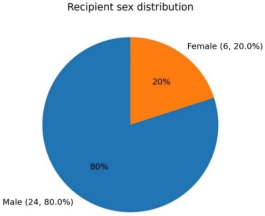
A total of 30 kidney transplantation were carried out within the study period. Twenty-four (80%) of the recipients were males while 6 (20%) were females as shown in
Figure 1. All the donors were males.
Figure 1. Showing recipient sex distribution.
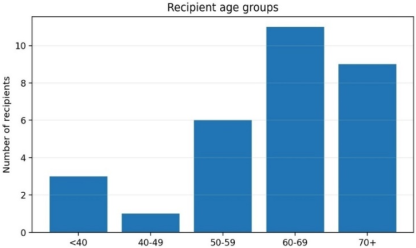
The recipient age profile is clinically important. The youngest recipient was 22 years and the oldest was 80 years with a mean age of 61.53 +/- 3.04 as shown in
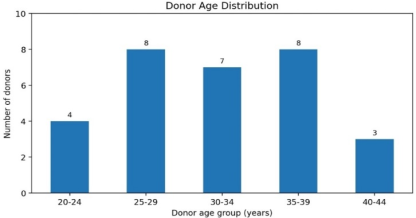
Figure 2. The youngest donor was 22 years while the oldest donor was 42 years with a mean age of 31.83 +/- 2.54 as shown in
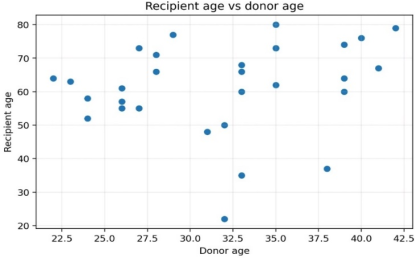
Figure 3. The donors are much younger than the recipient as depicted in
Figure 4.
Figure 2. Recipient age group distribution.
Figure 3. Donor age distribution.
Figure 4. Recipient age versus donor age.
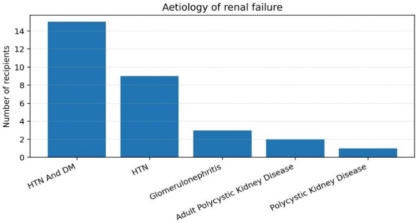
Hypertension coexisting diabetes mellitus was the leading cause of kidney failure accounting for 50% while hypertension alone was seen in 80% of cases. Other causes of ESRD are as shown in
Figure 5.
Figure 5. Etiology of renal failure.
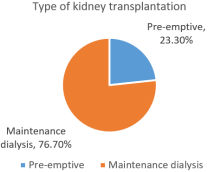
Seven patients (23.3%) had preemptive kidney transplant while 23 patients (76.7%) was on maintenance hemodialysis prior to kidney transplantation as depicted in
Figure 6.
Figure 6. Pre-emptive transplantation versus maintenance hemodialysis.
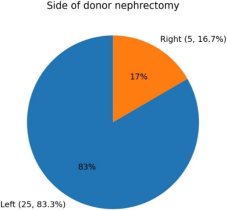
Figure 7. Site of donor nephrectomy.
Left donor nephrectomy dominated in 25 cases (83.3%) which right donor nephrectomy was performed in only 17.7% of the donors as depicted in
Figure 7. All patients had open donor nephrectomy with moderate flank incision not more than 10cm in length.
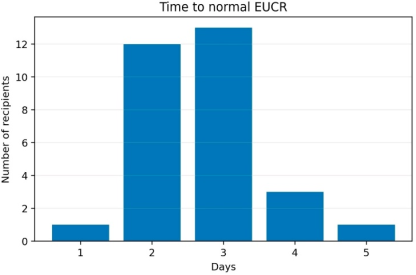
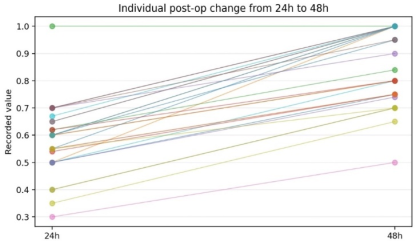
There was varying degree of post-operative decline in urea and creatinine in all the recipients (100%). All the recipients experienced significant improvement 24 hours post-surgery with progressive decline until eventually normalization of kidney function. 3.3% of the recipients achieved normal urea and creatinine in 24 hours while 40%, 43.3%, 10% and 3.3% achieved normal urea and creatinine within 2, 3, 4 and 5 days respectively as shown in
Table 1. The kidney function normalization profile is as shown in
Figure 8. The individual post-operative progress in kidney function is as depicted in
Figure 9 below.
Table 1. Time to normal kidney function/EUCR.
Days to normal EUCR | Count | Percentage |
1 | 1 | 3.3% |
2 | 12 | 40.0% |
3 | 13 | 43.3% |
4 | 3 | 10.0% |
5 | 1 | 3.3% |
Figure 8. Frequency distribution of time to normal kidney function.
Figure 9. Individual 24 hour to 48 hour post-operative progress in kidney function.
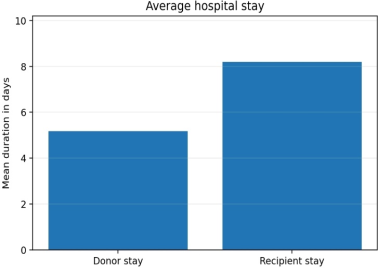
Donor stay ranges from five to six days. 83.3% were discharged on post-operative day five while 16.67% were discharged on post-operative day six. The recipient stay ranges from eight to ten days. Majority (83.3%) of the recipients were discharged on post-operative day eight while 13.33% and 3.33% were discharged on post-operative day nine and ten respectively as shown in
Table 2. The average hospital stay for donor and recipients is shown in
Figure 10.
Table 2. Frequency distribution of hospital stay for donors and recipients post-surgery.
Stay variable | Days | Count | Percentage of cases |
Donor stay | 5 | 25 | 83.3% |
Donor stay | 6 | 5 | 16.7% |
Recipient stay | 8 | 25 | 83.3% |
Recipient stay | 9 | 4 | 13.3% |
Recipient stay | 10 | 1 | 3.3% |
Figure 10. Average hospital stay for donor and recipients.
The 6 months and one year prognosis was excellent. 96.7% of recipient had improved QoL with return to normal life while only one recipient died within 6 months post-surgery. The recipient who died was an advanced elderly with multiple comorbid condition including airway hypersensitivity. The cause of death was due to airway restriction in an advanced elderly that defiled all medication intervention. No death was recorded amongst the donors and follow up review after 3 months was impressive.
4. Discussion
Kidney transplantation as a renal replacement therapy is a viable treatment for patients with a failing kidney or end-stage kidney disease and it significantly reduces morbidity and mortality compared to dialysis. Although there has been appreciable improvement in short-term outcome after kidney transplantation, long-term graft survival still remains insufficient. We observed an excellent outcome with overall graft survival rate of 96.7% after one year.
The success of kidney transplantation depends on the effectiveness of pre-transplant workup and a good recipient and donor selection. The importance of appropriate legal donor selection, satisfactory compatibility test, early commencement of immunosuppressant and premeditations, good surgical technique with experienced surgical and medical team, high dependence post-surgery care, serial daily monitoring of renal function, early postoperative intervention as well as continuous immunosuppression and lifetime follow up cannot be overemphasized.
| [4] | Legendre C, Canaud G, Martinez F. Factors Influencing Long-term Outcome after Kidney Transplantation. Transpl Int. 2014 Jan; 27(1): 19-27. https://doi.org/10.1111/tri.12217 |
[4]
This is similar to our transplant protocol. We observed strict donor selection via initial preliminary test including viral screening, ABO compatibility, renal function test and urologic scan to assess the kidney size before proceeding with HLA typing, cross matching and quantitative DSA assay. All matching donors pass through strict status verification, legal documentation and ethical clearance before they are considered duly appropriate for surgery. These probably had enormous impact on the graft survival and success rate observed in this index study. Obiatuegwu et al noted a success rate of over 82.7% in their experience at a private tertiary center. This is similar to the impressive outcome observed in this index study. Wang et al reported exponential increase in post-transplant survival rate of over 90% in United States exceeding the prognosis experienced in developing countries.
Our study significantly surpassed this observation by Wang et al. The prognosis and graft survival rate after 12 months was 96.7% in this study. This may be attributed to the strict adherence to laid down protocol with good patient selection, satisfactory compatibility test, standardization of transplant polices, strict legal guidelines and prompt anticipatory high dependency post-surgery care.
Age may influence the outcome of kidney transplantation. Many elderly patients have comorbid conditions such as hypertension and diabetes mellitus. These can predispose to greater risk of postoperative events compared to younger patients.
| [8] | Nyengaard JR, Bendtsen TF. Glomerular number and size in relation to age, kidney weight, and body surface in normal man. Anatomical Record. 1992; 232(2): 194–201.
https://doi.org/10.1002/ar.1092320205 |
[8]
We observed that the only patient that died in our study was an advanced elderly with multiple comorbid condition. However, while advanced age may influence the outcome of surgery, significant number of elderly patients who had kidney transplant also did well and probably contributed to the high success rate observed in our study. Obiatuegwu et al also observed that mortality after kidney transplant surgery in elderly is not primarily due to surgery or the age of the patient but probably from other confounding factors.
| [13] | Kenenna, O., Ernest, A., Kumar, A. R., Tunde, O., Lovely, F., et al. (2025). Successful Kidney Transplantation in an Advanced Elderly at Federal Medical Center Abuja: A Case Presentation. World Journal of Medical Case Reports, 6(3), 20-26. https://doi.org/10.11648/j.wjmcr.20250603.11.s |
[13]
43.3% of our patients were elderly and 92.3% progressed satisfactorily and were discharged on the post-operative day 8 to a responsible adult and a domiciliary health care assistant. The success rate we observed amongst the elderly was probably due to our strict pre-transplant protocol and good patient selection. The domiciliary care assistant assigned to these elderly recipients also contributed to the long term prognosis we observed in this study.
Pre-emptive kidney transplantation using is a viable option for younger patient with chronic kidney disease. It offers the best outcome with preservation of function of the native kidney.
| [9] | Martín P, Errasti P. Trasplante renal [Kidney transplant]. An Sist Sanit Navar. 2006; 29 Suppl 2: 79-91. Spanish. |
[9]
23.3% had pre-emptive KTP in our study. Contrary to the report by Martin P et al that younger patient benefit from preemptive KTP, patients who had pre-emptive KTP in our study were predominantly elderly with good performance status. This shows that pre-emptive KTP should be considered in all age group.
Khan I et al reported that hypertension is the commonest cause of renal failure with IgA nephropathy topping the list of major identifiable intrinsic kidney disease.
| [15] | Khan, I., Wani, M., Wani, I. et al. Incidence of complications and outcome in live kidney transplant recipients at 1 year—a single center experience. Egypt J Intern Med 37, 30 (2025). https://doi.org/10.1186/s43162-025-00414-z |
[15]
Obiatuegwu et al reported hypertension and diabetic mellitus as the most common etiology of ESRD requiring renal replacement therapy with male predominance.
| [14] | Foroncewicz B, Mucha K, Florczak M, Szymańska A, Ciszek M, Durlik M, Górski A, Kieszek R, Kosieradzki M, Nazarewski S, Gałązka Z, Pączek L. Long-term Outcome of Renal Transplantation: A 10-year Follow-up of 765 Recipients. Pol Arch Intern Med. 2019 Aug 29; 129(7-8): 476-483.
https://doi.org/10.20452/pamw.14914. |
[14]
This is similar to our findings which observed that 80% of the recipient had hypertension while 50% had both hypertension and diabetes. This underscores the importance of strict control of these comorbid conditions to avert progressive deterioration of renal function.
Kumar et al reported that left donor nephrectomy remains the side of preference because the left renal vein is longer which have enormous advantage during eventual anastomosis. In some cases, right donor nephrectomy becomes inevitable and harvested for donation if the left kidney has complex anatomy or better reserve than the right. Surgeons display bias for left donor nephrectomy and will do right donor nephrectomy as an open procedure especially in centers where laparoscopic donor nephrectomy is routinely performed.
Obiatuegwu et al also reported their preference for left donor nephrectomy due to long renal vein though right donor nephrectomy was faster because the time spent in isolating the gonadal, adrenal and lumbar veins does not apply.
| [14] | Foroncewicz B, Mucha K, Florczak M, Szymańska A, Ciszek M, Durlik M, Górski A, Kieszek R, Kosieradzki M, Nazarewski S, Gałązka Z, Pączek L. Long-term Outcome of Renal Transplantation: A 10-year Follow-up of 765 Recipients. Pol Arch Intern Med. 2019 Aug 29; 129(7-8): 476-483.
https://doi.org/10.20452/pamw.14914. |
[14]
These observations are similar to our findings which showed that 83.3% of voluntary donors had left donor nephrectomy. Our choice of left donor nephrectomy was basically due to longer vascular anatomy. 16.7% had right donor nephrectomy because the left kidney had complex vascular anatomy which may increase the risk of complication post-surgery.
The duration of hospital stay for donors in our study was 5 days in 83.3% of cases. The donors had surgery 24 hours after they were admitted and discharged 4 days after surgery. This is similar to the length of hospital stay with minimally invasive surgery/laparoscopic donor nephrectomy. Shahbazov et al reported that laparoscopic donor nephrectomy had longer operation time, longer combined length of incision but shorter median hospital length of stay of 4 days compared to open donor nephrectomy.
| [17] | Shahbazov R, Maluf D, Azari F, Hakim D, Martin O, Dicocco P, Alejo JL, Saracino G, Hakim N. Laparoscopic Versus Finger-Assisted Open Donor Nephrectomy Technique: A Possible Safe Alternative. Exp Clin Transplant. 2020 Oct; 18(5): 585-590. https://doi.org/10.6002/ect.2019.0115 |
[17]
The duration of hospital stay was similar to our findings. This shows that open donor nephrectomy is a viable and safe alternative to laparoscopic donor nephrectomy with good outcome. We also recorded no donor morbidity or mortality. Enhanced recovery after kidney transplantation is most times not considered by clinicians especially for recipients due to perceived frailty and risk of post-surgery complications. Angelico et al observed that majority of the recipients were discharged after 5 days. 46.7% of the recipients were discharged within the ERAS target (≤5 days), while 53.3% were discharged after 5 days.
| [18] | Angelico R, Romano F, Riccetti C, Pellicciaro M, Toti L, Favi E, Cacciola R, Manzia TM, Tisone G. The Enhanced Recovery after Surgery (ERAS) Pathway Is a Safe Journey for Kidney Transplant Recipients during the "Extended Criteria Donor" Era. Pathogens. 2022 Oct 16; 11(10): 1193.
https://doi.org/10.3390/pathogens11101193 |
[18]
Recipient within the ERAS target had similar post–surgery complications and outcome compared to those who stayed longer. Our study observed that our patients had surgery 2 days after they were admitted and discharged 6 days post-surgery with a cumulative hospital stay of 8 days. This is similar to the observation by Angelico et al and could be adjudged to fall within ERAS protocol.
Prognosis after kidney transplantation have improved with the current protocol of pre-transplant screening and early commencement of immunosuppressant. Wang et al reported an improved post-transplant outcomes with one year graft and patient survival rates of over 90%.
This is similar to our finding. We observed progressive improvement immediately after surgery with normalization of kidney function within 2-3 days. We also observed a variation with a particular case whose kidney function normalized 24 hours after surgery. Our prognosis was remarkable with 93.3% graft survival after one year. Failed kidney transplantation are increasing in number. These patients report several complications from either renal failure or continuous administration of immunosuppressant. Return to hemodialysis and continuation of expensive immunosuppressant drains scarce resources especially in Nigeria where these patients pay out of pocket. Several studies suggests surgical removal of the failed allograft in order to discontinue immunosuppressant with accompanying side effects.
We observed failed surgery in 6.7% of recipients in our study. We performed graftectomy in one of the patients because he had serious life-threatening side effect due to immunosuppressant. The psychological impact of failed kidney transplantation and the role of a psychologist and mental health physician in the preparation of these patients for repeat surgery cannot be overemphasized. We counseled the family and referred them to the psychologist.
Kidney transplantation in the elderly can be challenging with fatality that may not be related to surgery. Pinter et al reported that elderly recipients had improved quality of life and were able to enjoy life at an appreciable established capacity. Emphasis should be focused on careful patient selection, excellence surgical techniques and adequate post-operative care to achieve a desirable outcome.
| [13] | Kenenna, O., Ernest, A., Kumar, A. R., Tunde, O., Lovely, F., et al. (2025). Successful Kidney Transplantation in an Advanced Elderly at Federal Medical Center Abuja: A Case Presentation. World Journal of Medical Case Reports, 6(3), 20-26. https://doi.org/10.11648/j.wjmcr.20250603.11.s |
[13]
40% of the patients in our study are elderly and 36.7% showed significant improvement after surgery with discontinuation of hemodialysis.
Improving access to kidney transplantation continuous to be a critical global priority. However, several factors including medical, psychosocial, geographic and socioeconomic status can disrupt the program and delay transplantation. The lack of consensus on the best approach to these barriers invariably contributes to the variation in several transplant center protocol. Our satisfactory outcome was probably due to strictly adherence to our local protocol which includes good patient selection, complete HLA typing, cross matching and DSA quantitative analysis, legal documentation, early commencement of immunosuppression with premedication, experience transplant team, good surgical techniques and high dependency unit monitoring. Improving understanding of how to best address these indices can empower transplant centers with appreciable progress toward eventual successful transplantation.
Author Contributions
Obiatuegwu Kenenna: Conceptualization, Data curation, Formal Analysis, Funding acquisition, Investigation, Methodology, Project administration, Resources, Supervision, Validation, Writing – original draft, Writing – review & editing
Aniede Ernest: Formal Analysis, Funding acquisition, Supervision, Validation, Writing – review & editing





 Share This Article
 Twitter
 Linked In
 Facebook
 Copy
Copy Download